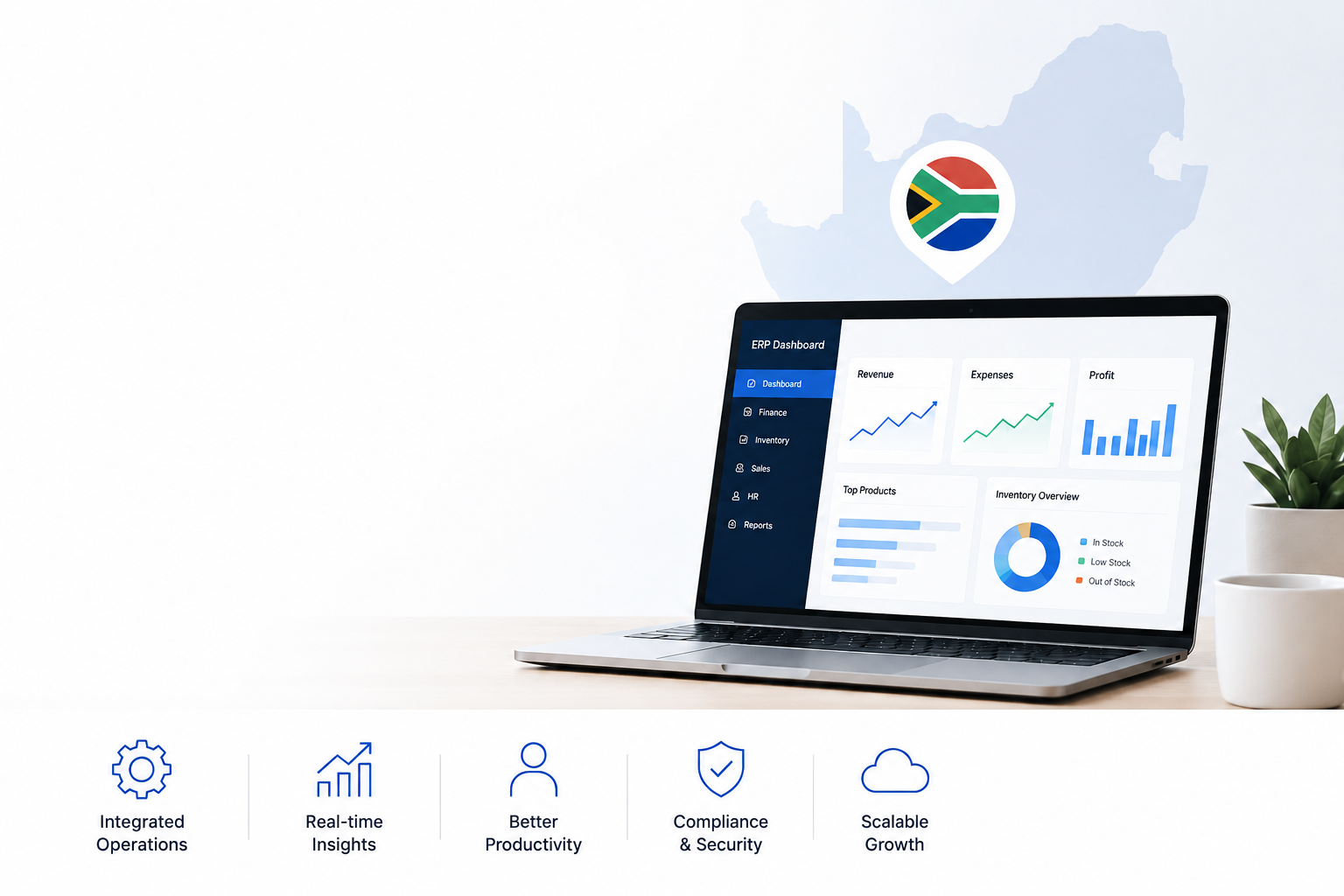
Buying an ERP in South Africa is a local decision dressed up as a global one. The factors that quietly make or break it aren't on the vendor's slide deck: SARS and VAT compliance, when to tackle payroll, how far the system bends to your processes, currency exposure on foreign-priced software, the renewal trap that's driving businesses off locked platforms, who really controls your data, POPIA, local partner depth, and B-BBEE. Get these right and the brand on the box barely matters. Get them wrong and even a "best" ERP becomes an expensive mistake.
This is the companion to our best ERP for South African businesses guide — there we name the systems; here's what to actually weigh before you sign.
1. SARS and VAT compliance
Your ERP has to live comfortably with SARS — clean VAT handling, VAT201 reporting, the right tax codes, and output that reconciles to eFiling without a spreadsheet in between. Global platforms vary: some have proper South African tax localisation, others lean on a local partner or add-on to get there. Before you buy, ask to see VAT201-ready reporting on South African data — not a US sales-tax demo dressed up as proof.
2. South African payroll — and when not to do it
SA payroll is its own discipline: PAYE, UIF, SDL, EMP201 and EMP501 submissions, IRP5 certificates, and the reconciliation rhythm SARS expects. Two warnings from real implementations:
First, a foreign ERP having a "payroll module" does not mean it supports South African rules. Built-in payroll is often generic. SARS compliance frequently needs a dedicated local provider — Sage, PaySpace, or SimplePay — or a properly localised build. Don't assume the box that says "payroll" knows what an EMP201 is.
Second, do not bolt payroll onto your ERP go-live. An ERP implementation already strains the business, and adding payroll to that scope risks the one thing you can never get wrong — paying your people, on time. A late or broken payroll during an ERP transition is a brutal combination. If you're committed to your ERP long-term, building payroll into it later is a sound move — but as a separate phase, once the ERP and your operations are stable. And if you're still small, keep payroll separate entirely; combining the two adds real risk for very little gain.
3. Bank integration
Direct feeds to the major South African banks save real reconciliation effort every month. Sage handles local bank integration well; Odoo supports it but still has gaps with certain banks; global platforms range from excellent to "you'll be importing statements." Check your specific banks, not just "South African banks" in general — and weigh it in proportion, because a missing feed is an inconvenience you can work around. Which brings us to the factor that matters more.
4. Customisation flexibility — the most underrated factor
This quietly decides whether an implementation succeeds: how easily does the system bend to your processes, rather than forcing your business to bend to it? Some locally-strong systems are excellent for standard operations but difficult to modify when your workflows are unusual — and "it fits that business beautifully" does not mean it will fit yours.
So here's the rule we apply when buyers are torn between two systems — one with stronger bank integration, one with stronger customisation: prioritise customisation. A bank feed you can replace with a few minutes of imports a week. A system that can't accommodate how you actually operate, you can't replace without ripping it out. The cost of rigidity compounds for years. (Worth reading alongside how much ERP customisation is advisable.)
5. Currency exposure on foreign-priced ERP
A cost that never shows up in the demo: most global ERPs — NetSuite, Microsoft Dynamics, Odoo's hosted plans — are priced in US dollars or euros. Every time the rand weakens, your subscription gets more expensive in real terms, year after year, for the same product. Locally-built or rand-billed options insulate you. It doesn't mean ruling out USD-priced systems — they're often worth it — but budget for currency movement and fold it into total cost of ownership, not the converted price on the day of the quote. Over five years, forex drift moves the real number meaningfully — and it compounds the next problem.
6. The renewal trap: discounts, lock-in, and the year-three shock
This is the trap quietly driving businesses off some platforms. Vendors win the deal with a heavy first-year discount — and an even better one if you lock in for three years or more. It feels like a bargain. The bill arrives at renewal, when the discount erodes and you have no control over the increase.
A real pattern: a system listed at R1m a year, sold at 50% off — R500k. Three years later the renewal discount drops to 25%, and the bill jumps to R750k — a 50% increase for the same software, and by then you're deep into the platform and can't easily leave. This is a major reason NetSuite has been losing customers: the lock-in removes your leverage exactly when you need it.
Two defences. Model the cost at list price, not the discounted quote — assume the discount erodes. And be wary of long lock-ins, especially paired with USD pricing, because the year-three number can be eye-watering once forex and discount erosion stack.
7. Data ownership and cloud control
Cloud is the right default for most South African businesses — the real question is which kind of cloud. There's a meaningful difference between cloud that leaves you in control of your data and black-box cloud where the vendor controls everything.
Open cloud — Odoo.sh, or Oracle Cloud Infrastructure now hosting JD Edwards — gives you the cloud's convenience while keeping full access to and control over your data, including the underlying database. Locked clouds are different: NetSuite, for instance, controls the whole environment, and you don't get access to the physical database the way you would on Odoo.sh; some Sage cloud products are similarly closed. Neither is automatically wrong, but know what you're signing — can you get your data out, and on whose terms?
Self-hosting is also viable again; Odoo.sh and similar make it far less painful than it used to be. (And while load-shedding has eased, it isn't guaranteed — so weigh reliable access and resilient or offline-capable options where uptime is critical.) For the full trade-off, see cloud vs on-premise ERP.
8. POPIA and data residency
The Protection of Personal Information Act sets real obligations around how you store and handle personal data. For an ERP, ask where your data physically lives, what the vendor's security and breach posture is, and whether you can meet your POPIA duties on their platform. Some vendors offer local or regional data centres; others store offshore. Neither is automatically wrong — but it should be a conscious choice, and it ties directly to the data-control question above.
9. Local partner and support depth
A vendor with no real South African implementer is a risk no demo reveals. When something breaks — or when SARS changes a rule — you want people who know the local context and are in your time zone. The depth of the SA partner network varies enormously: Sage and SYSPRO have deep local benches; some global products have thin local presence. Ask who, specifically, will implement and support you locally — by name.
10. B-BBEE and procurement
Uniquely South African and easy to overlook. If you sell to government or large enterprises, your own B-BBEE scorecard matters — and the implementation partner you choose can feed into it. A B-BBEE-rated partner can support your procurement position, which a foreign-headquartered vendor's local office may or may not offer. It's a partner-level consideration rather than a product one, but for some businesses it's a genuine factor.
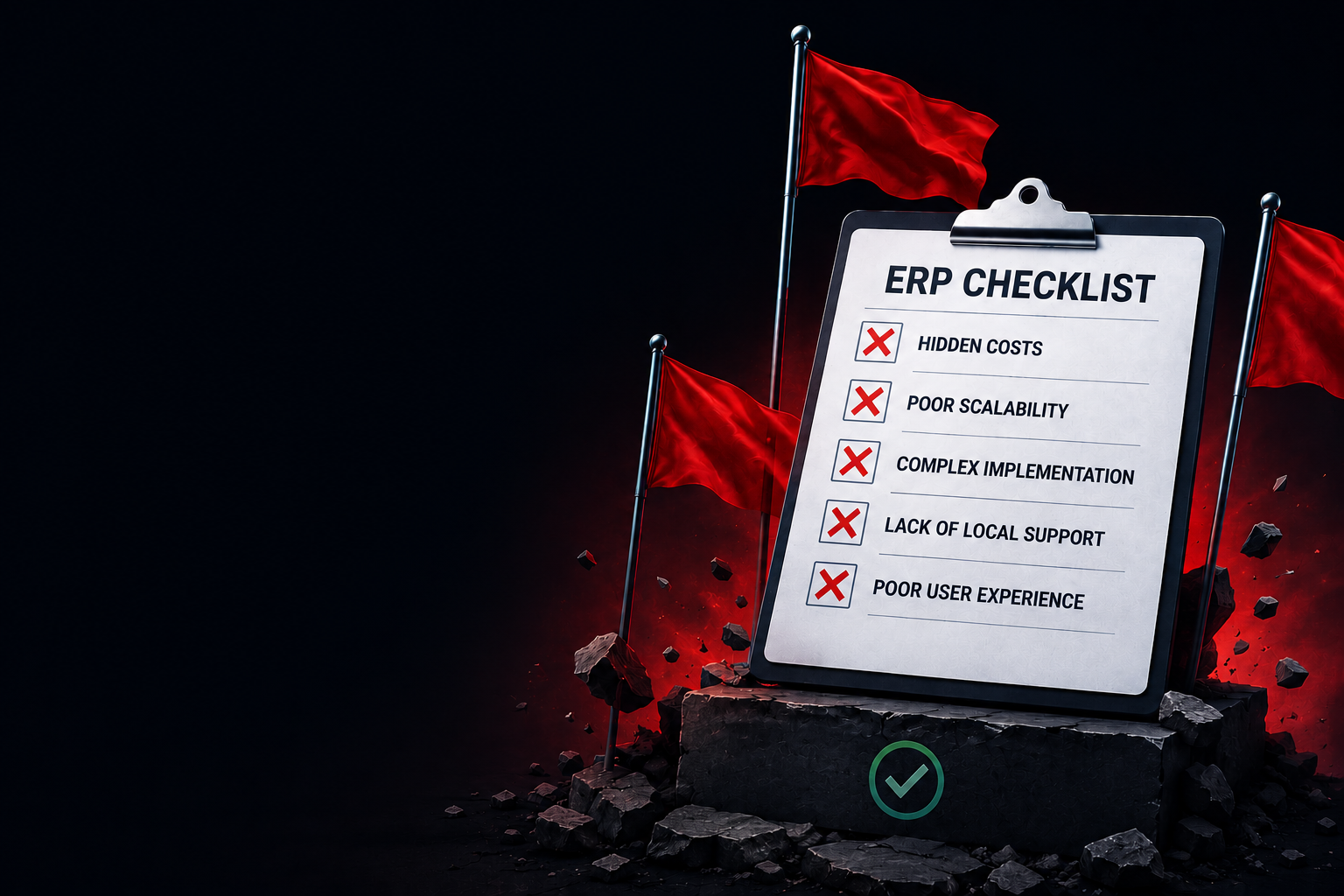
A local buying checklist
Before you sign, make sure you can answer:
- Does it produce VAT201-ready reporting on South African data?
- Is payroll a separate, later phase — not part of the go-live?
- Does it integrate with your specific banks?
- How customisable is it for your actual processes?
- What's the cost at list price including currency movement over five years?
- Are you locked in, and what happens to the discount at renewal?
- Do you keep control of and access to your data?
- Where does your data live, and can you meet POPIA?
- Who, by name, implements and supports you locally?
- Does the partner choice affect your B-BBEE position?
Work through those before you talk to a vendor, not after. For the systems that tend to score well against them, see the best ERP for South African businesses; for the general process, how to choose an ERP.
Frequently Asked Questions
Should I include payroll in my ERP implementation?
Not in the initial go-live. An ERP implementation already strains the business, and adding payroll risks the one thing you cannot get wrong — paying staff on time. If you want payroll in your ERP long-term, do it as a separate phase once the system and operations are stable. While you're small, keep payroll separate entirely. Also note that a foreign ERP having a "payroll module" does not mean it supports South African rules — SARS compliance often needs a local provider like Sage, PaySpace, or SimplePay.
Why is NetSuite losing customers in South Africa?
A major reason is the renewal trap. Platforms are often sold with a heavy first-year discount and a multi-year lock-in; at renewal the discount erodes and the increase is outside your control. A system sold at 50% off (say R500k against a R1m list) can renew at 25% off — R750k — a 50% jump for the same software, with no easy exit. Combined with an ageing architecture and USD pricing, that has pushed South African businesses to look elsewhere.
How does the rand affect ERP costs?
Many global ERPs are priced in US dollars or euros, so a weakening rand raises your real subscription cost over time even though the product hasn't changed. Budget for currency movement across a five-year horizon and include it in total cost of ownership — and remember it compounds with renewal discount erosion. Locally-priced or rand-billed systems reduce this exposure.
Do I own my data in a cloud ERP?
It depends on the platform. Open cloud options like Odoo.sh — or Oracle Cloud Infrastructure hosting JD Edwards — keep you in control of your data, including database access. Locked clouds like NetSuite (and some Sage cloud products) control the environment, and you don't get the same access to the physical database. Before signing, confirm you can extract your data and on what terms.
Is customisation or bank integration more important?
When you have to choose, prioritise customisation. A missing bank feed can be worked around with statement imports in minutes a week, but a system that can't bend to how your business operates forces years of friction or an expensive rip-and-replace. Bank integration is convenient; customisation flexibility is structural.
What's the first step in buying an ERP in South Africa?
Define your requirements — industry processes, customisation needs, SARS obligations, integration must-haves, and a realistic five-year budget at list price including currency — before you talk to any vendor. Then match systems to that. A free, vendor-agnostic ERPLenz assessment, built by South African ERP practitioners, scores your business and flags the local factors that matter most.
Buying an ERP in South Africa is a local decision dressed up as a global one. ERPLenz is a free, vendor-agnostic assessment built by SA ERP practitioners — it scores your business and gives you a ranked shortlist matched to your processes and South African requirements, with no vendor bias.