Nonprofits get sold the wrong system just as often as businesses do — sometimes more. A small charity signs up for an enterprise platform it will never grow into and burns a year's worth of donor goodwill on an implementation it didn't need. A growing NGO clings to consumer bookkeeping software long past the point where it can prove to funders how restricted grants were actually spent. Both mistakes are expensive, and both are avoidable.
The honest truth most "best nonprofit software" lists won't tell you: the right system depends far more on your size, complexity, and reporting obligations than on which brand ranks first. And for a lot of nonprofits, the right answer isn't a full ERP at all. Let's fix that.
Why nonprofit needs are genuinely different
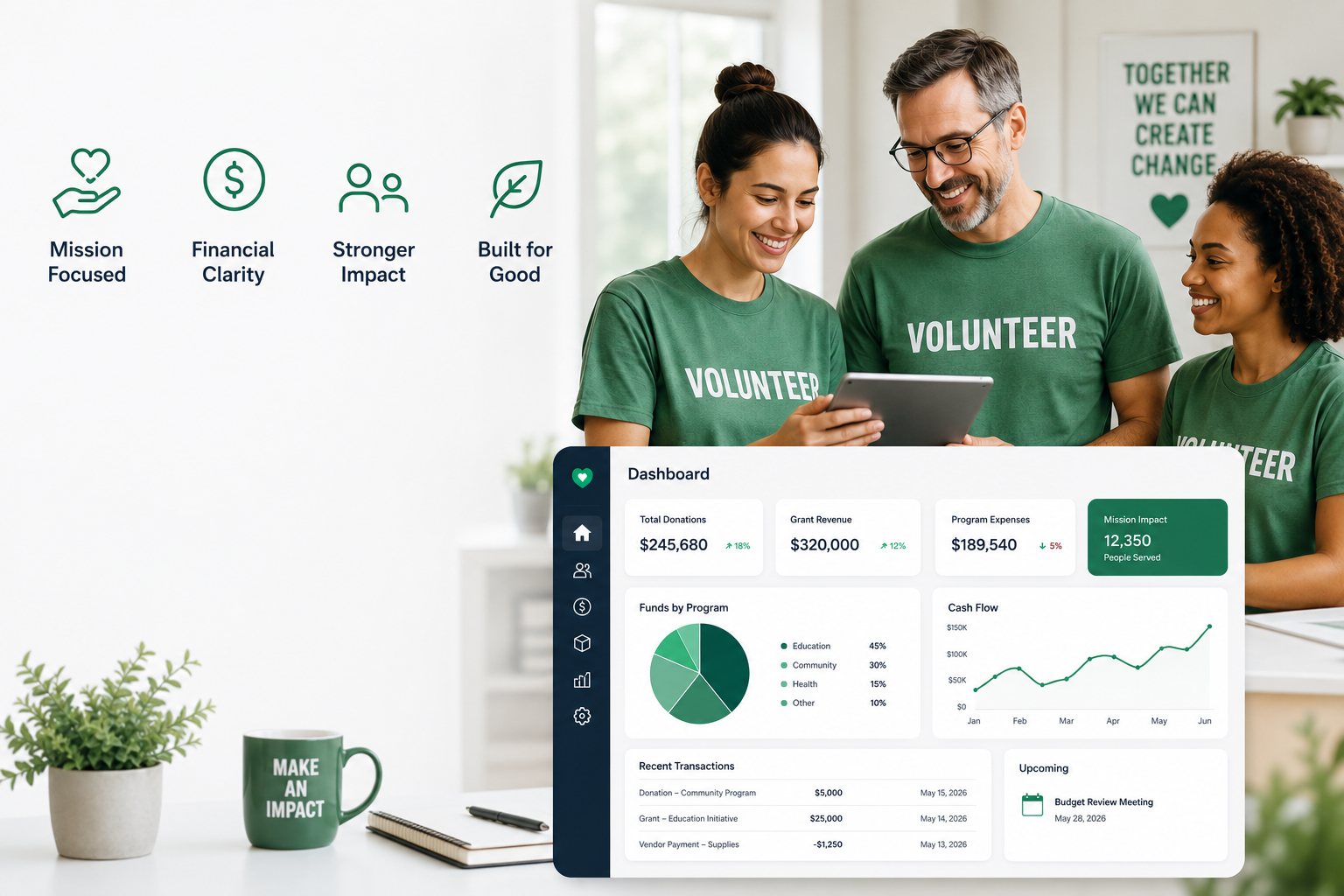
A commercial ERP is built to track profit. A nonprofit system has to track accountability — and that changes everything:
- Fund accounting. Money isn't one pool. It's split into restricted and unrestricted funds, and you must be able to prove that restricted money was spent only on what the donor or grant specified. Regular accounting software fakes this with workarounds; nonprofit systems do it natively.
- Grant tracking. Budget-vs-actual per grant, reimbursable grant claims, and multi-year grant reporting are core needs, not add-ons.
- Nonprofit financial reporting. FASB-compliant statements (or your local equivalent), functional expense reporting, and board-ready summaries — the outputs auditors and funders expect.
- Donor management. Often a separate system (a fundraising CRM) that feeds the finance system, rather than living inside the ERP itself.
If a platform can't do fund accounting cleanly, it's the wrong platform for a nonprofit — no matter how good it looks otherwise.
First question: do you even need an ERP?
This is the question the affiliate listicles skip, because "you don't need our recommendation" doesn't pay commissions. But it's the most important one. Match the tool to your actual complexity:
If you're tiny or all-volunteer — a handful of transactions, one or two funds, no paid finance staff — you need simple, fund-aware bookkeeping, not an ERP. Options like Wave (free) or entry-tier cloud accounting are plenty.
If you're a small-to-mid nonprofit with real fund accounting and grant reporting but a lean team, you want purpose-built nonprofit accounting software, still not a heavy ERP.
If you're larger, finance-led, multi-entity, or running commercial operations (a trading arm, events, e-commerce), that's where a genuine ERP earns its cost.
Buying a tier too high wastes money and stalls on implementation. Buying a tier too low means you outgrow it and migrate again in two years. Aim for where you'll be in three years, not where you are today.
The systems that actually work for nonprofits
Here's the honest landscape in 2026, grouped by who they're really for.
Small teams and faith-based orgs — nonprofit-native, easy to run
- Aplos — built specifically for the sector. True fund accounting without needing an accounting background, popular with small-to-mid and faith-based organizations. If you want nonprofit features out of the box and simplicity over power, start here.
- QuickBooks Online — the default for many smaller nonprofits: familiar, affordable, widely supported by bookkeepers. Fund accounting is workable but relies on classes/tags rather than native funds — fine until your restricted-fund reporting gets complex.
- Xero — clean, affordable cloud accounting with nonprofit pricing in many regions; a common budget pick for small charities and grassroots groups.
Growing, finance-led nonprofits — serious fund accounting
- Sage Intacct — widely regarded as the gold standard for nonprofit fund accounting, with dimensional reporting across funds, departments, grants, and entities, and strong budget-vs-actual and reimbursable-grant tracking. Best suited to organizations roughly in the $2M–$200M range; expect subscriptions starting around $12,000/year and typical spend in the $25,000–$35,000 range. Powerful, but priced for organizations that genuinely need the depth.
- MIP Fund Accounting — a long-standing fund-accounting specialist built expressly for nonprofits and government, strong on grant and encumbrance tracking.
- Microsoft Dynamics 365 Business Central — a practical, more affordable ERP-grade option, especially if you're already in the Microsoft ecosystem and want room to grow into fuller ERP capabilities.
Large or complex nonprofits — full ERP
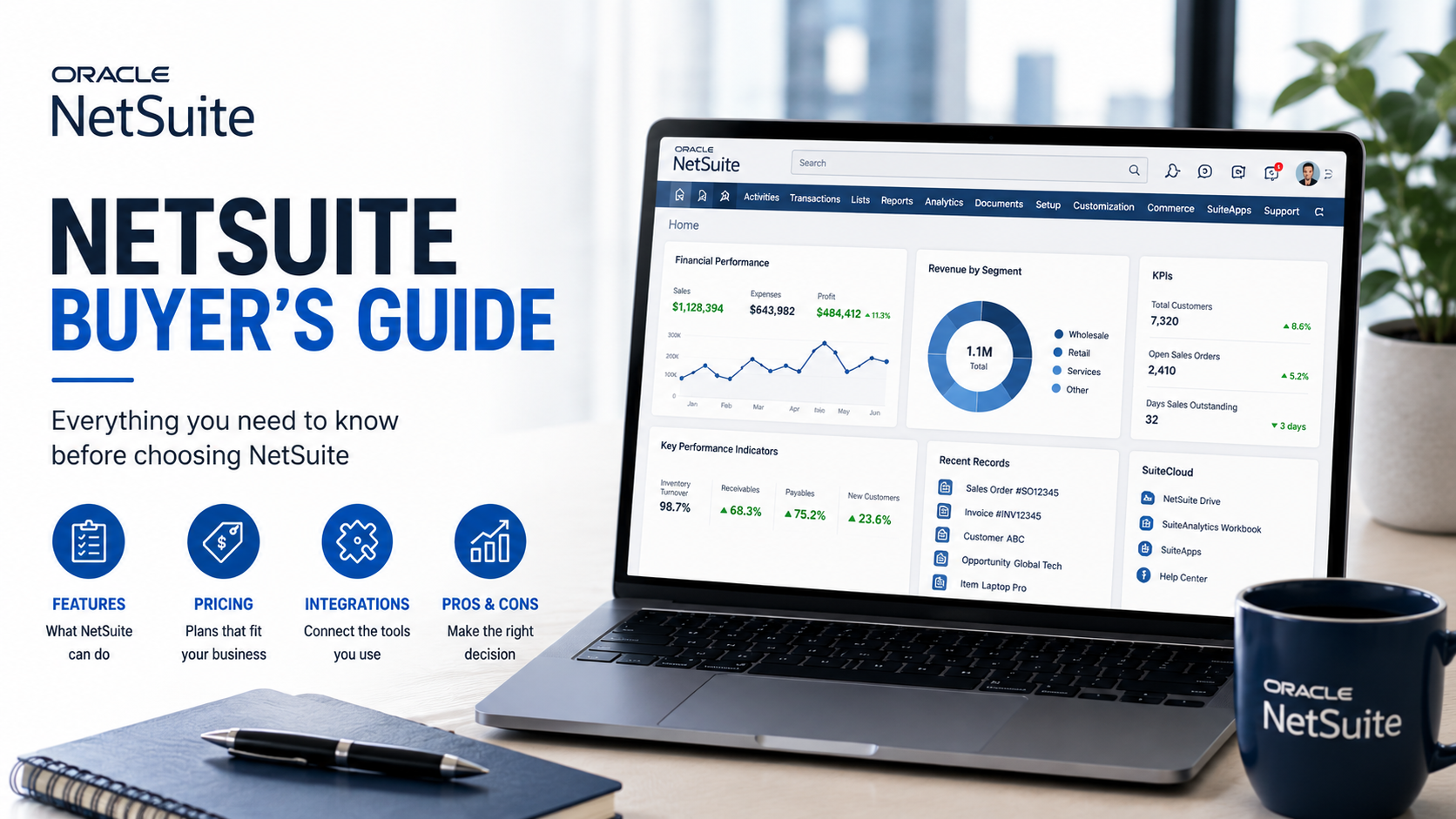
- Oracle NetSuite (Nonprofit / Social Impact edition) — pre-configured fund accounting, grant management, and nonprofit reporting, with the breadth to run financials, CRM, e-commerce, and HR on one platform. Best for complex nonprofits (roughly $10M–$500M), particularly those with significant commercial or trading operations. Powerful and broad — and a real implementation commitment.
- Blackbaud Financial Edge NXT — the dedicated nonprofit specialist for organizations that need deep reporting and a tight link between fundraising and finance, especially those already using Blackbaud's Raiser's Edge for fundraising. Not a general ERP, but purpose-built for the sector's reporting demands.
The flexible wildcard
- Odoo — highly flexible and budget-friendly, and its modular design lets you assemble finance, CRM, and operations in one place. But be honest with yourself: Odoo has no official nonprofit edition, so fund accounting and grant reporting mean configuration and a capable partner — great if you have technical support, risky if you don't.
How to actually decide
Skip the brand and answer these:
- Revenue and transaction volume — which tier above do you genuinely sit in?
- Restricted-fund complexity — a couple of funds, or dozens of grants with different rules? The more complex, the more you need native fund accounting (Sage Intacct, MIP, Blackbaud, NetSuite).
- Commercial operations — do you also run trading, events, or e-commerce? That pushes you toward a full ERP like NetSuite.
- Multi-entity — multiple legal entities or countries to consolidate? Fewer systems handle this well; it narrows the field fast.
- Fundraising integration — do you need finance tightly wired to donor/fundraising data? That's Blackbaud's home turf.
- In-house capability and budget — a lean team is better served by something simple and nonprofit-native than by a powerful platform nobody has time to run.
The failure mode is choosing on features you'll never use. The win is matching the system to your real complexity — and being ruthless about not over-buying.
The bottom line
There is no single "best ERP for nonprofits." There's the best fit for a 4-person charity (simple, fund-aware bookkeeping), the best fit for a grant-heavy mid-size NGO (real fund accounting), and the best fit for a complex, multi-entity organization with trading arms (a full ERP). Buy for the one you actually are.
If you're a larger nonprofit weighing the mainstream ERP platforms against each other — NetSuite vs Dynamics vs the rest — that's exactly the kind of decision worth scoring objectively rather than by sales pitch.
ERPLenz is a vendor-agnostic ERP selection tool built from real implementation experience. Take the free assessment to score the major ERP platforms against your organisation's exact requirements — no sales calls, no vendor commissions.